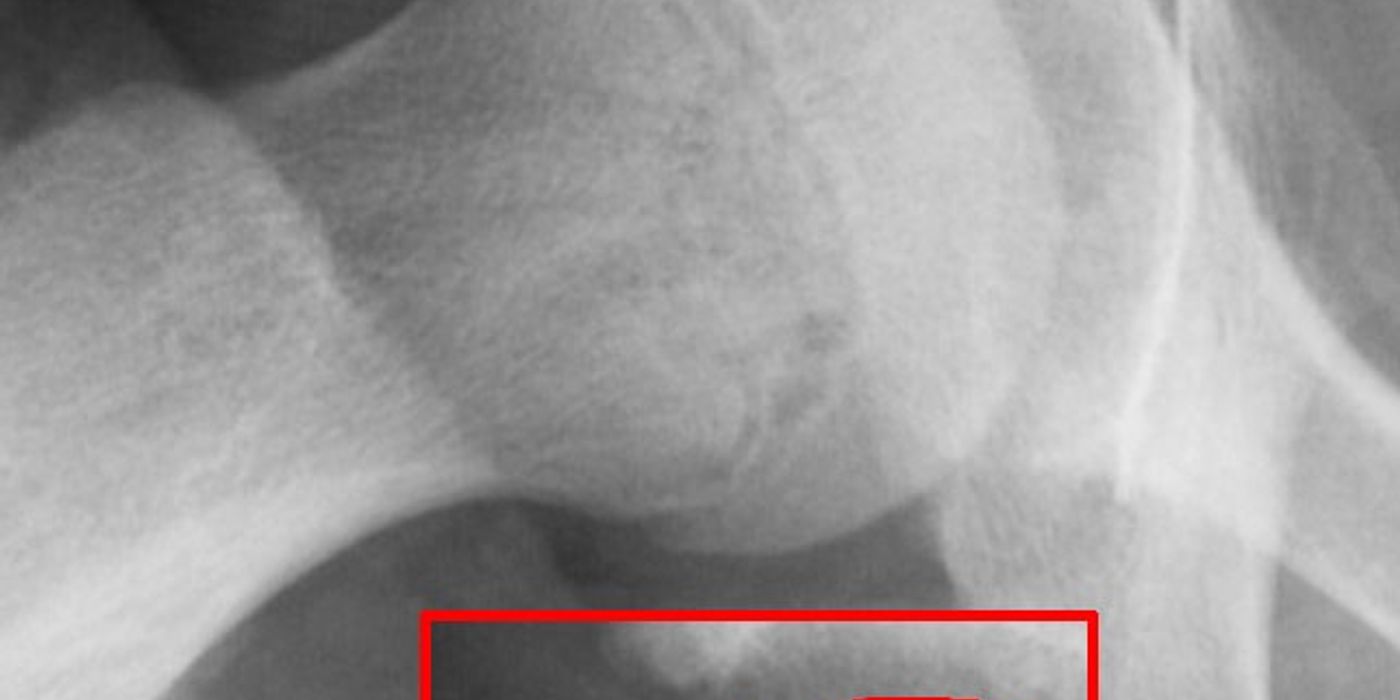
Slipped upper femoral epiphysis (SUFE, also called SCFE) is a disorder of the adolescent hip in which the femoral head epiphysis displaces posteriorly and inferiorly relative to the femoral neck through a weakened growth plate; it is the most common adolescent hip disorder requiring surgery, and standard treatment is urgent screw fixation ("pinning in situ"). Perthes' disease is idiopathic avascular necrosis of the immature femoral head, typically affecting boys aged four to eight, which passes through predictable radiographic stages over two to four years; management aims to keep the softened femoral head "contained" within the acetabulum so it remodels into a congruent sphere. Both conditions are core paediatric hip topics at the ST3 Trauma & Orthopaedics interview because they test recognition of the limping child, urgency of decision-making, and knowledge of avascular necrosis (AVN).
How does SUFE present and how is it diagnosed?
The British Orthopaedic Surgery Surveillance (BOSS) study — a prospective cohort covering 143 of 144 hospitals treating the condition in Great Britain — reported an annual incidence of 3.34 per 100,000 children aged 6 to 18, a median age of 12.7 years, a slight male predominance, and obesity in around a quarter of affected children (Perry et al., Bone & Joint Journal, 2022). Presentation is with limp and pain in the hip, groin, thigh or — classically and treacherously — the knee. Referred knee pain is the classic cause of missed diagnosis: BOSS found that "diagnostic delays were common and associated with worse radiological deformity".
What to do:
- Examine the hip in any child or adolescent with knee or thigh pain. Loss of internal rotation and obligatory external rotation on flexion are characteristic.
- Image with an AP pelvis and a frog-leg lateral (or cross-table lateral if unstable) — early slips are often visible only on the lateral. Look for Trethowan's sign (Klein's line along the superior femoral neck failing to intersect the epiphysis) and physeal widening.
- Image both hips: bilateral involvement is common at presentation or subsequently.
How is SUFE classified?
The clinically dominant classification is Loder's stability classification, defined by weight-bearing ability, because it predicts AVN (Loder et al., JBJS Am, 1993).
| Loder class | Definition | AVN risk |
|---|---|---|
| Stable | Able to bear weight, with or without crutches | Near zero in Loder's original series |
| Unstable | Unable to bear weight even with crutches | 47% in Loder's series; 23% at two years in the contemporary UK BOSS cohort |
Severity is conventionally graded by the Southwick slip angle on the lateral view: mild (<30°), moderate (30–50°) and severe (>50°). The older temporal classification (acute / chronic / acute-on-chronic, based on a three-week symptom threshold) is still quoted but is less predictive of outcome than stability.
How is SUFE managed?
Immediate management is good practice rather than a formal national standard: make the child non-weight-bearing immediately, admit, keep nil by mouth, and refer urgently to the on-call orthopaedic team. There is no condition-specific BOAST for SUFE, but the joint BOA/BSCOS document Best Practice in Children's Trauma & Orthopaedics in the UK (2025) lists SUFE among the "key potentially life-changing injuries" that "should be discussed at PRMs" (regional peer-review meetings), reflecting its capacity for lifelong harm from low-energy presentation and the expectation of network-level oversight and agreed referral pathways to specialist centres.
Stable slips
The standard of care is pinning in situ: a single cannulated screw passed percutaneously across the physis into the centre of the epiphysis, accepting the deformity, to prevent further slip and induce physeal closure. In the BOSS cohort, single-screw fixation was used in 85% of cases. For severe stable slips, UK practice divides almost exactly between pinning in situ and open reduction with deformity correction (for example the modified Dunn procedure): BOSS documented a 50:50 split, and the ongoing "Big BOSS" randomised trial is comparing acute deformity correction against pinning in situ for severe stable slips. Open reduction carried the highest AVN risk in BOSS (adjusted odds ratio 7.5), which an interview candidate should weigh against the impingement consequences of accepted deformity.
Unstable slips
Unstable slips are the surgical emergency. Options are urgent fixation (with or without gentle positional reduction and capsular decompression) or a deliberately delayed strategy; BOSS found 60% had urgent surgery and 40% a planned delay, so timing remains genuinely contested — a good answer states the AVN stakes, advocates prompt senior-led surgery, and acknowledges the evidence gap rather than quoting an invented time target.
The other hip
Prophylactic fixation of the contralateral hip was performed in 30% of BOSS cases. Among untreated opposite hips, 11.5% slipped within two years, particularly in children under 12.5 years — so younger age and endocrine risk factors (hypothyroidism, renal osteodystrophy, growth hormone treatment) strengthen the case for prophylactic pinning; otherwise counsel the family carefully and safety-net.
What are the complications of SUFE?
- AVN — 7.1% overall at two years in BOSS; concentrated in unstable slips (23%; adjusted OR 4.4) and after open reduction (adjusted OR 7.5). It is the complication that destroys the hip.
- Chondrolysis — acute cartilage necrosis with global stiffness; associated with unrecognised screw penetration of the joint.
- Femoroacetabular impingement and early osteoarthritis — the residual metaphyseal prominence of a healed slip produces a cam-type deformity.
What is Perthes' disease and how does it present?
Perthes' disease is idiopathic AVN of the developing femoral head. The parallel BOSS Perthes cohort reported an incidence of 2.48 per 100,000 children aged 0 to 14, with 77.6% male and a median age at diagnosis of 5.4 years (Perry et al., Bone & Joint Journal, 2022). Presentation is an insidious painless or mildly painful limp, sometimes with knee pain and restricted abduction and internal rotation. The differential in the limping child includes transient synovitis, septic arthritis (exclude urgently if febrile), SUFE in the older child, and juvenile idiopathic arthritis. Radiographs (AP and frog-lateral) may be normal early; the disease then evolves through the Waldenström stages — sclerosis, fragmentation, reossification and healed/remodelling — over roughly two to four years.
What is containment and how is Perthes' disease managed?
The containment principle: while the femoral head is necrotic and plastic, keeping it seated deeply within the acetabulum uses the socket as a mould so the head reossifies spherical and congruent. Containment can be pursued non-surgically (maintaining movement, particularly abduction, and modifying load) or surgically (proximal femoral varus osteotomy, or acetabular-sided procedures such as shelf or Salter osteotomy).
Non-surgical management now has UK consensus backing. The 2024 Delphi consensus of 40 UK children's orthopaedic specialists (Galloway et al., Bone & Joint Journal, 2024) recommends that every child be offered an initial physiotherapy assessment with ongoing input until independent self-management; that high-impact activity be restricted in the early stages — contact sports "should be discouraged", as should trampolines and long-distance running — with swimming and cycling encouraged instead; walking aids if symptoms persist; range of motion documented at every visit; and structured family education on the disease course.
Surgery is common but unproven. In BOSS, 33.4% of hips had containment surgery (varus osteotomy 57.8%, shelf 32.1%, Salter 4.5%), yet surgery showed no effect on two-year radiological outcome (OR 1.03), leading the authors to conclude there was no evidence of improved outcomes and that a randomised trial was warranted. That trial — Op Non-STOP, randomising children aged 5 to 12 to containment surgery versus a structured non-surgical package — began recruiting in November 2024. The best available guide to selection remains Herring's prospective multicentre study (JBJS Am, 2004): children aged 8 or under at onset with lateral pillar B hips did equally well with or without surgery, whereas those over 8 with B or B/C-border hips had better outcomes with surgical treatment.
What determines prognosis in Perthes' disease?
| Herring lateral pillar group | Definition (fragmentation stage) | Implication |
|---|---|---|
| A | Lateral pillar height fully preserved | Good outcome expected |
| B | >50% lateral pillar height retained | Outcome age-dependent; surgery benefits the over-8s |
| B/C border | Narrow or poorly ossified pillar at ~50% | Added in 2004; behaves between B and C |
| C | <50% lateral pillar height retained | Poorest prognosis |
Younger age at onset is protective (more remodelling time); in BOSS, female sex, age over six and more than 50% radiological collapse predicted worse outcomes. Long-term outcome is graded by the Stulberg classification at maturity — a spherical congruent head (Stulberg I–II) predicts a near-normal hip, an aspherical congruent head (III–IV) moderate risk of arthritis, and an aspherical incongruent hip (V) early degenerative change.
Key points
- Examine the hip in every child with knee pain — diagnostic delay in SUFE is common and worsens deformity (BOSS, 2022).
- Loder stability drives SUFE prognosis: AVN is rare in stable slips but affected 23% of unstable slips at two years in the UK BOSS cohort (47% in Loder's original series).
- Standard treatment of SUFE is urgent single-screw pinning in situ; unstable slips are an emergency, and open reduction carries the highest AVN risk.
- Consider prophylactic contralateral pinning — 11.5% of untreated opposite hips slipped within two years, especially under age 12.5.
- Perthes' management rests on containment; UK consensus (2024) defines the non-surgical package, and BOSS found no evidence that containment surgery improves radiological outcome — the Op Non-STOP trial is addressing the question.
- Prognosis in Perthes' depends on age at onset and lateral pillar grade: surgery has demonstrated benefit mainly in children over 8 with Herring B or B/C hips.
- There is no SUFE-specific BOAST, but BOA/BSCOS best practice (2025) requires SUFE cases to be discussed at regional peer-review meetings as potentially life-changing injuries.