Orthopaedic Knowledge Library
Condition-by-condition guides with a management focus — anatomy, classifications and the evidence behind each decision, mapped to the ST3 interview stations.
Upper Limb Trauma
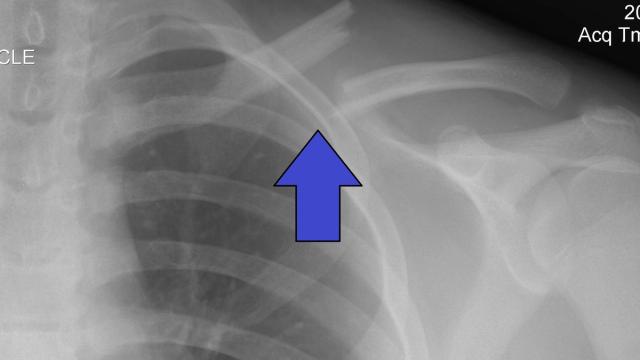
Clavicle Fractures: Classification, Evidence and Management
Most clavicle fractures heal in a sling; displaced midshaft fractures carry a 10–15% nonunion risk without surgery, so fixation is an individualised decision.
Distal Humerus Fractures: Classification, Dual Plating and Total Elbow Arthroplasty
In McKee's randomised trial of 42 patients aged over 65 with comminuted intra-articular distal humerus fractures, total elbow arthroplasty beat fixation on the Mayo Elbow Performance Score at 3, 6, 12 and 24 months, and 5 of the 21 patients randomised to fixation could not be fixed.
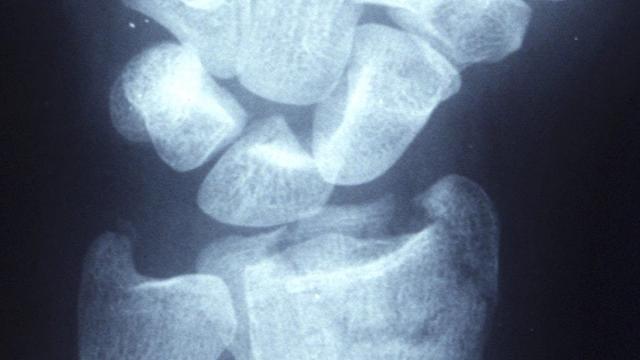
Distal Radius Fractures: Assessment, Management and the Evidence (BOAST, NICE NG38, DRAFFT)
UK guide to distal radius fractures: BOAST Dec 2017 standards, NICE NG38, DRAFFT/DRAFFT2 evidence, acceptable parameters and median nerve emergencies.
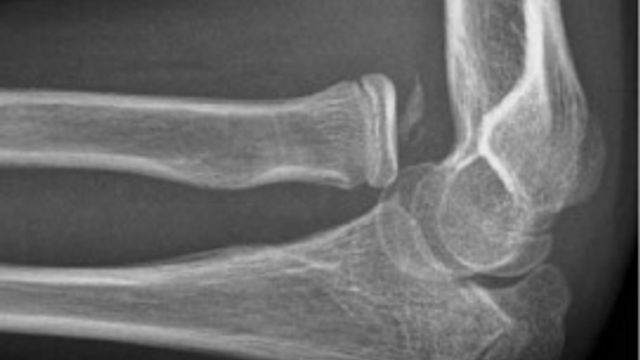
Elbow Injuries: Terrible Triad, Radial Head and Olecranon Fractures, and Dislocation
UK guide to adult elbow trauma — terrible triad, Mason radial head fractures, olecranon fractures, dislocations, stiffness and HO — with evidence and BOAST links.
Forearm Fractures (including Open Injuries): Diagnosis and Management
UK guide to forearm and open forearm fractures: BOAST/NICE-aligned initial care, plate fixation, Monteggia and Galeazzi patterns, compartment syndrome.
Humeral Shaft Fractures: Functional Bracing, the Radial Nerve and the BOAST on Peripheral Nerve Injury
Radial nerve palsy complicates 11.8% of humeral shaft fractures and 88.1% recover, so a primary palsy is examined, documented and watched rather than explored (Shao 2005); most closed fractures unite in a functional brace.
Proximal Humerus Fractures: Neer Classification, PROFHER and When to Operate
The PROFHER trial found no significant difference in Oxford Shoulder Score over two years between surgery and a sling for displaced proximal humerus fractures involving the surgical neck (39.07 versus 38.32), and NICE NG38 offers non-surgical management for uncomplicated displaced low-energy injuries.
Scaphoid Fractures: Diagnosis, Management and Nonunion
UK guide to scaphoid fractures: retrograde blood supply, MRI diagnosis per NICE NG38, cast vs fixation after SWIFFT, and nonunion surgery.
Shoulder Dislocation and Instability
UK guide to first-time and recurrent shoulder dislocation: reduction, associated injuries, Bankart vs Latarjet, and posterior dislocation.
Lower Limb Trauma
Achilles Tendon Rupture: Diagnosis, UKSTAR Evidence and Management
Achilles rupture is diagnosed with the Simmonds test; most UK patients do equally well with non-operative functional bracing (UKSTAR) as with surgery.
Acute Compartment Syndrome: Diagnosis and Management (Jul 2025 BOAST)
Acute compartment syndrome: pain out of proportion, ΔP under 30 mmHg, immediate two-incision four-compartment fasciotomy — per the Jul 2025 BOAST.
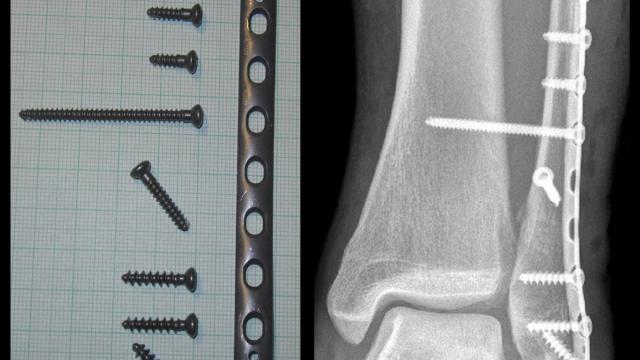
Ankle Fractures: Classification, Stability and Management (UK Guidelines)
UK guide to ankle fractures: Weber and Lauge-Hansen classification, stability assessment, the Aug 2016 BOAST, ORIF vs casting, and elderly-specific evidence.
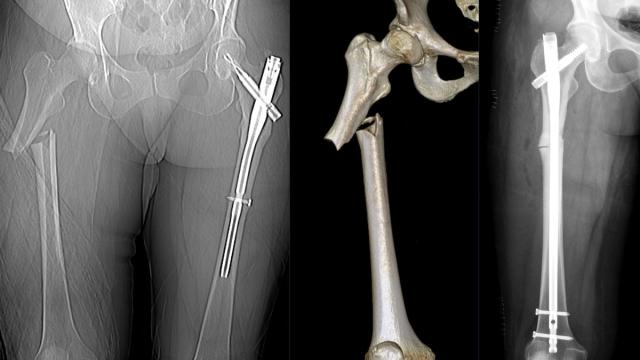
Femoral Shaft Fractures: Assessment, Nailing and Damage Control
Femoral shaft fractures are treated with reamed locked IM nailing; timing follows physiology — early total care versus damage control orthopaedics.
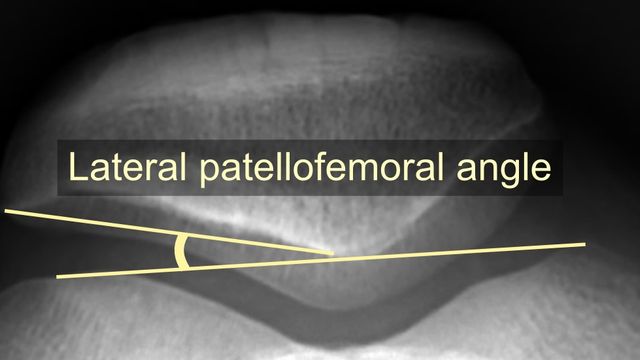
First-Time Patellar Dislocation: Assessment and Management (Dec 2024 BOAST)
Reduce without delay, X-ray with skyline view, no cast or aspiration, early motion and physio; surgery only for associated injury, per the Dec 2024 BOAST.
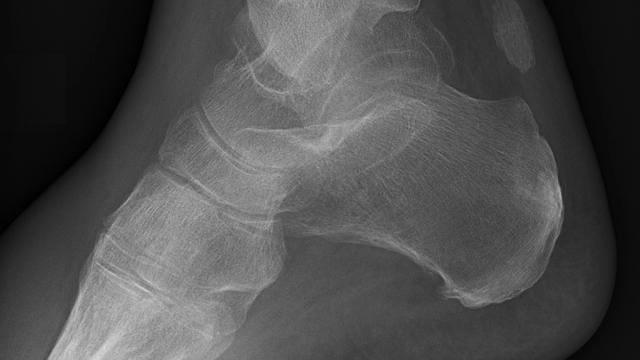
Hindfoot Fractures (Calcaneus and Talus): Diagnosis, Management and the Evidence
UK guide to calcaneal and talar neck fractures: Sanders and Hawkins classifications, HeFT trial evidence, BOAST-aligned soft-tissue care and AVN risk.
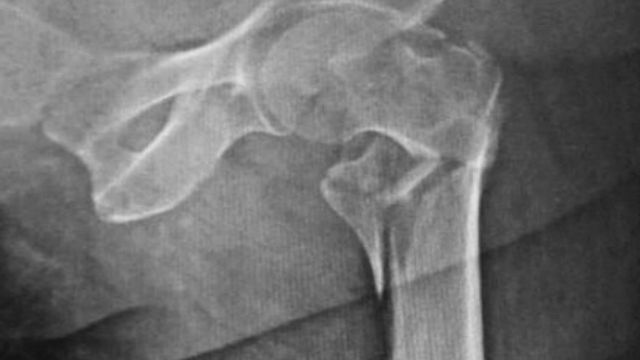
Hip Fractures (Neck of Femur): Classification, NICE-Aligned Management and the 36-Hour Target
UK guide to neck of femur fractures: intracapsular vs extracapsular, NICE CG124 management, 36h surgery target, hemiarthroplasty vs THR, DHS vs nail, NHFD.
Hip Fractures in the Young Adult
Young-adult femoral neck fracture is a surgical urgency: anatomical reduction and stable fixation aim to preserve the femoral head and avoid AVN.
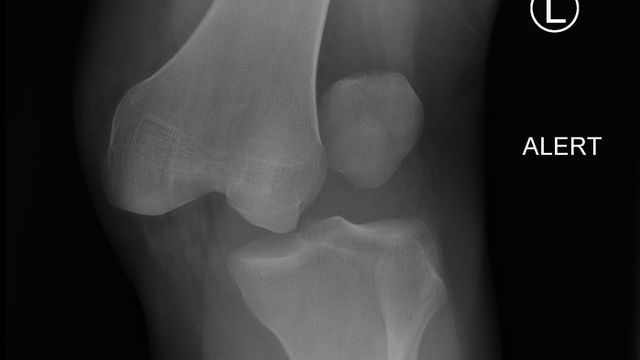
Knee Dislocation and Multiligament Injury
UK guide to knee dislocation: Schenck grading, ABPI and CTA vascular assessment, the Jun 2026 arterial injuries BOAST, spanning fixation and ligament surgery.
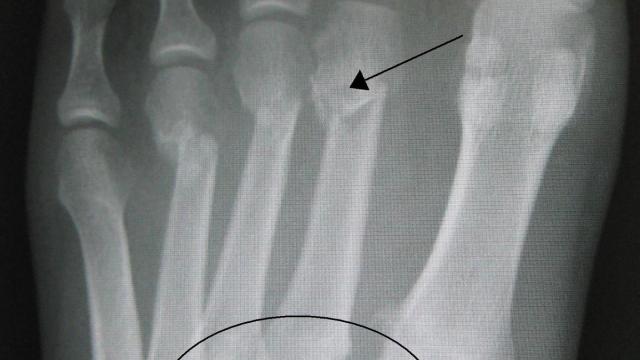
Lisfranc Injuries
Lisfranc injuries are tarsometatarsal fracture-dislocations; up to 20% are missed initially, and unstable injuries need anatomical reduction or primary fusion.
Open Fractures of the Lower Limb
UK guide to open lower limb fractures: antibiotics within 1 hour, orthoplastic care, debridement timed by contamination, soft tissue cover within 72 hours.
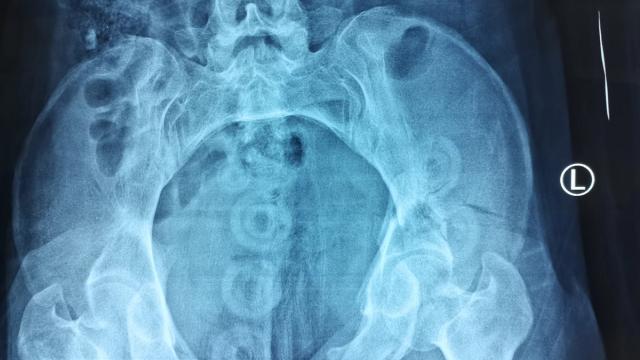
Pelvic Ring Injuries: Assessment, Haemorrhage Control and Definitive Management
UK guide to pelvic ring injuries: Young-Burgess classification, binder and haemorrhage control, the Jan 2018 BOAST standards, and definitive fixation.
Periprosthetic Hip Fractures
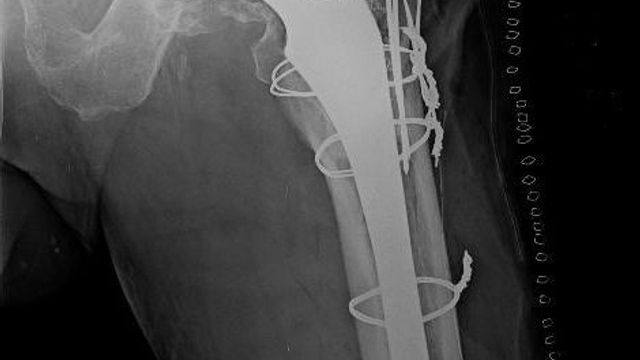
Periprosthetic hip fractures are managed by stem stability (Vancouver/UCS): fix well-fixed stems, revise loose ones, on a hip-fracture-style frailty pathway.
Tibial Plateau Fractures: Schatzker Classification, the Soft Tissue Envelope and Staged Fixation
A tibial plateau fracture is managed in stages: the soft tissue envelope decides the timing, a spanning external fixator holds the high-energy injury, and definitive fixation waits until the swelling allows it (Egol 2005: 5% deep infection with a staged protocol).
Spine
Cauda Equina Syndrome: Red Flags, Emergency MRI and the National (GIRFT) Pathway
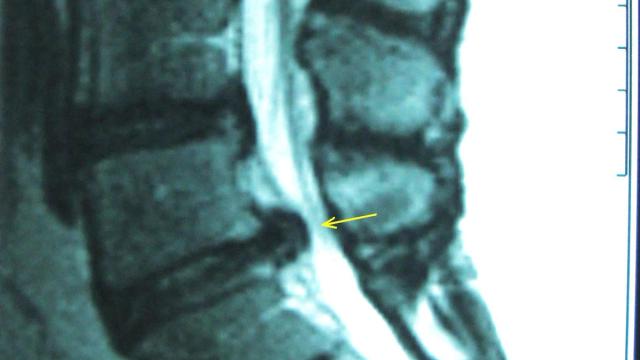
Emergency compression of the lumbosacral nerve roots: red flags, emergency MRI within 4 hours and prompt decompression under the 2023 GIRFT pathway.
Spinal Trauma Assessment and Spinal Cord Injury
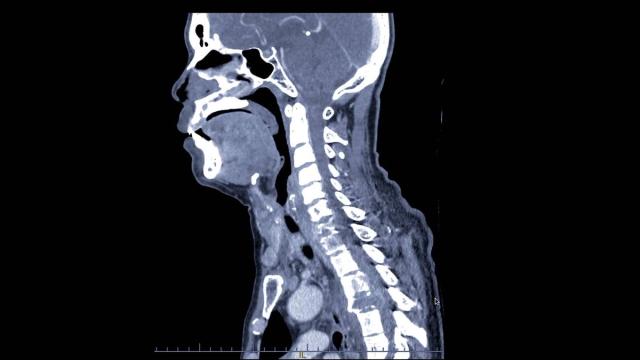
UK guide to spinal trauma: Apr 2025 BOAST spine assessment, clearing the spine, AO classification, spinal vs neurogenic shock, and the Nov 2022 SCI BOAST.
Paediatric Orthopaedics
Developmental Dysplasia of the Hip: NIPE Screening, Ultrasound Timing and the Pavlik Harness
The NIPE programme examines every baby's hips before 72 hours and again at 6 to 8 weeks; a screen-positive hip has an ultrasound at 4 to 6 weeks with an outcome decision by 6 weeks of age, while the BSCOS consensus asks for a scan within 2 weeks of an abnormal examination.
Paediatric Forearm Fractures: Remodelling, Manipulation and the CRAFFT Evidence
The CRAFFT trial randomised 750 children aged 4 to 10 with severely displaced distal radial fractures and found casting saved £1,665 per patient with only a 1.64-point PROMIS difference at 3 months, supporting a cast-first strategy for most children.
Paediatric Musculoskeletal Infection: Septic Arthritis, Osteomyelitis and the May 2022 BOAST
UK guide to paediatric MSK infection: Kocher criteria, organisms by age, imaging, and the May 2022 BOAST surgical thresholds for septic arthritis.
SUFE and Perthes' Disease: Classification, Management and Prognosis
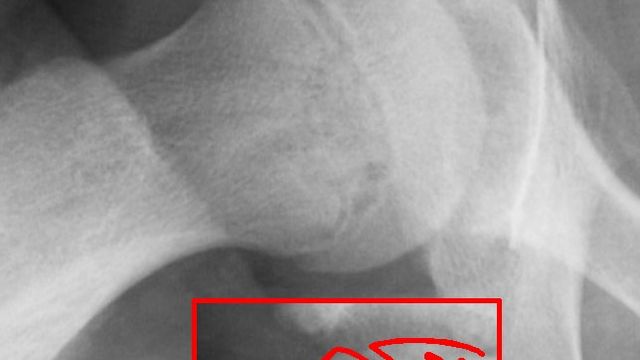
SUFE and Perthes' disease explained for UK practice: stable vs unstable slips, pinning in situ, AVN risk, containment principles and prognosis.
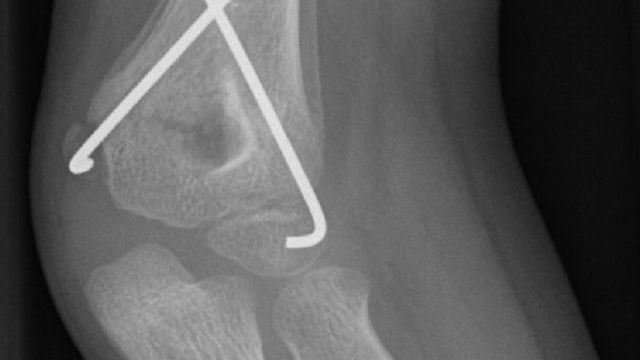
Supracondylar Fractures of the Humerus in Children
UK guide to paediatric supracondylar humeral fractures: Gartland classification, Oct 2020 BOAST timing, pink pulseless hand, nerve injuries and K-wiring.
Elective Orthopaedics
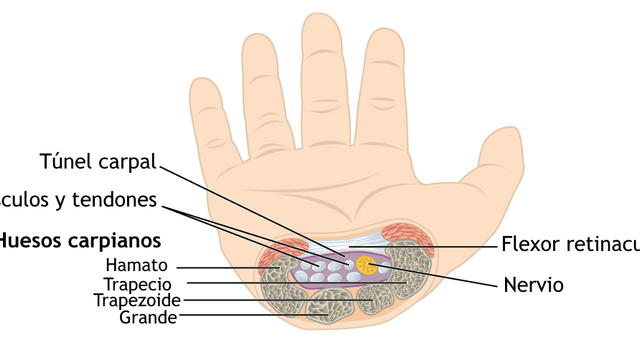
Carpal Tunnel Syndrome: Diagnosis, NICE CKS Management Ladder and Surgical Release
Median nerve compression at the wrist: diagnosis is clinical; NICE CKS advises a 6-week splint or steroid injection trial, then open or endoscopic release.
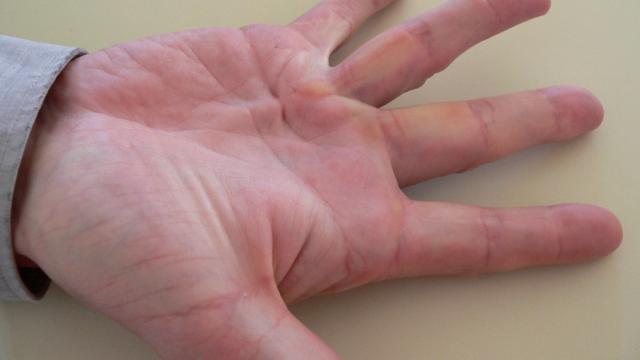
Dupuytren's Disease
Dupuytren's disease: palmar fibromatosis causing finger contracture. UK options are needle fasciotomy or fasciectomy; collagenase was withdrawn in 2020.
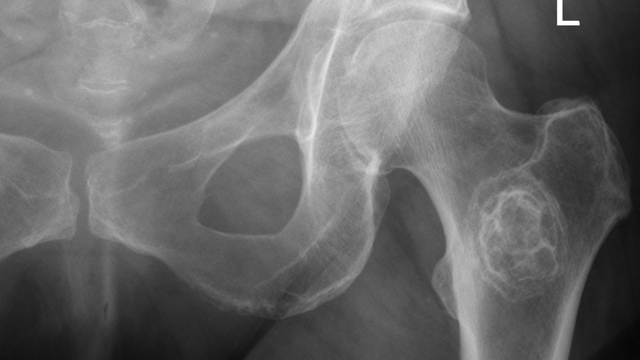
Metastatic Bone Disease: Diagnosis, Mirels Scoring and Management (BOAST 2022)
UK guide to metastatic bone disease: red flags, work-up before fixation, Mirels score, prophylactic fixation and MSCC, per the Jun 2022 BOAST and NICE NG234.
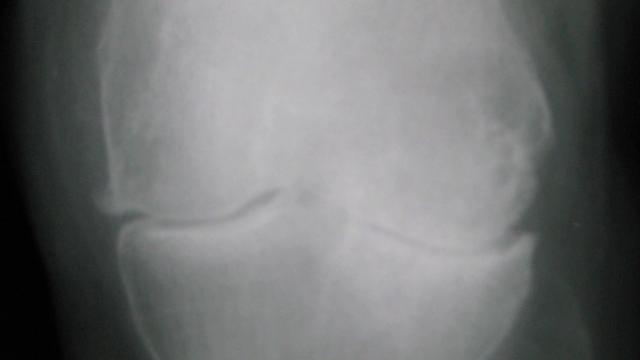
Osteoarthritis of the Hip and Knee
UK guide to hip and knee osteoarthritis: NICE NG226 ladder, arthroplasty referral, NJR outcomes, ODEP ratings, and the day-case and robotic debates.
Bone and Joint Infection
Flexor Tendon Sheath Infection (Pyogenic Flexor Tenosynovitis)
Flexor sheath infection is a hand emergency: Kanavel's signs, empirical IV antibiotics and urgent sheath washout within 24 hours per BSSH standards.
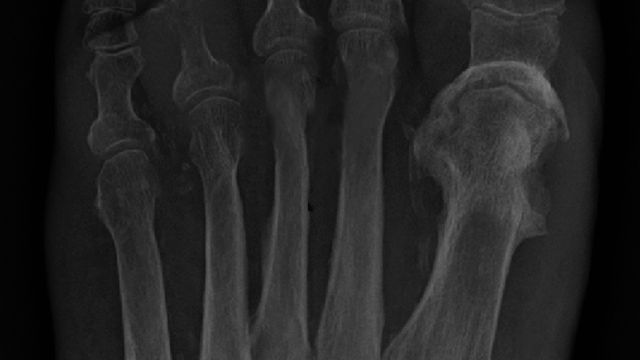
Fracture-Related Infection and Osteomyelitis
FRI is infection at a fracture site, diagnosed by consensus confirmatory criteria and managed with MDT-led debridement, stability and targeted antibiotics.
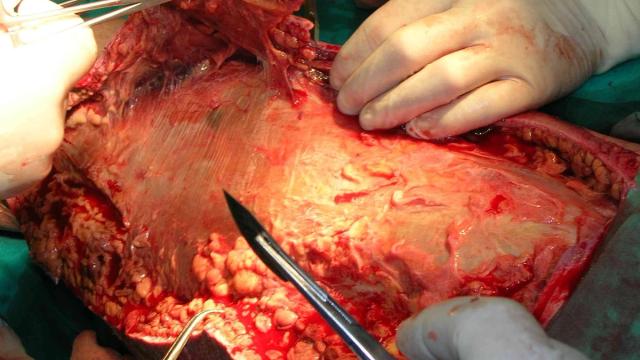
Necrotising Fasciitis and Severe Soft-Tissue Infections
Necrotising fasciitis is a clinical diagnosis and surgical emergency: start sepsis care and antibiotics, then debride immediately, per the Jul 2025 BOAST.
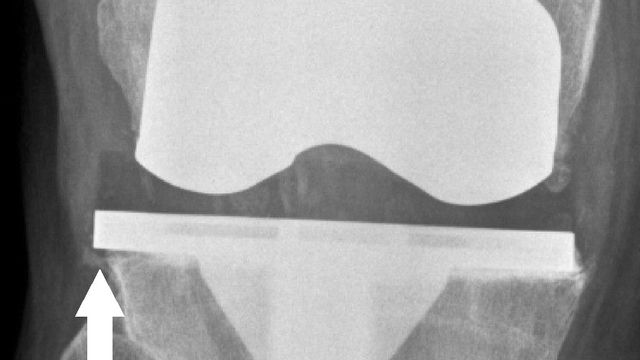
Periprosthetic Joint Infection (PJI)
PJI is infection of a joint replacement. UK care: no antibiotics before deep samples, sepsis six, DAIR for acute cases, one- or two-stage revision via MDT.
Septic Arthritis (Native Joint): Diagnosis and Management
Septic arthritis is a surgical emergency: aspirate before antibiotics, urgent washout, Kocher criteria in children, and UK BOAST/BSR standards explained.
Operative Principles
Compression Plating: Principles
Compression plating creates absolute stability for direct bone healing; use it for simple fractures and bridge plating for comminuted ones.
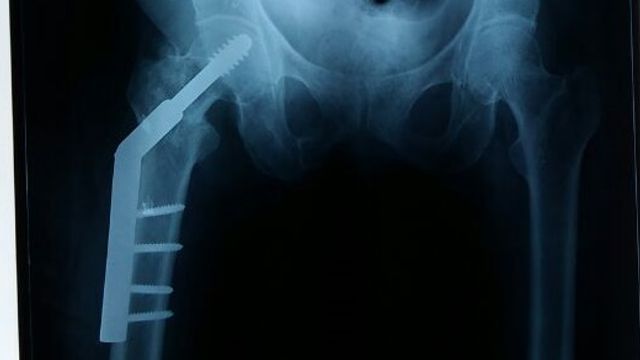
Dynamic Hip Screw: Principles and Technique
How a DHS works by controlled collapse, when to use it (stable intertrochanteric fractures), the tip-apex distance evidence, technique steps and DHS vs nail.
Joint Aspiration: Indications and Technique
Joint aspiration samples synovial fluid for diagnosis or relief. Aspirate before antibiotics; prosthetic joints need specialist, theatre-grade sampling.
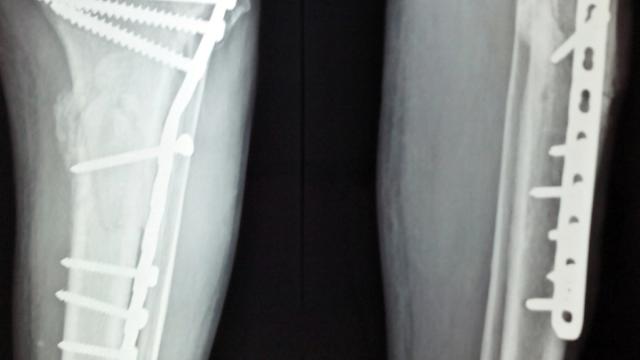
Lag Screw Fixation: Principles
Lag screws create interfragmentary compression — by technique or design — giving absolute stability and direct bone healing in simple fracture patterns.
Surgical Approaches to the Hip
Posterior, lateral (Hardinge), anterolateral and direct anterior hip approaches: intervals, structures at risk, and which approach suits which operation.
Tumour and Infection
FAQ
What is the Knowledge library?
A free, evidence-based reference covering the orthopaedic conditions that matter for the ST3 interview and day-to-day practice — management-focused, anchored to the current BOAST and NICE standards, and reviewed against the live guideline text.
How is each article kept accurate?
Every guideline claim is checked against the current published standard (BOAST, NICE, GIRFT) and each article lists its key evidence. The last-reviewed date is shown on every article.
How does this help with the ST3 interview?
Each condition links to how it comes up at interview — the station vignette and opening questions — and the question bank turns the same topics into full station practice with model answers.