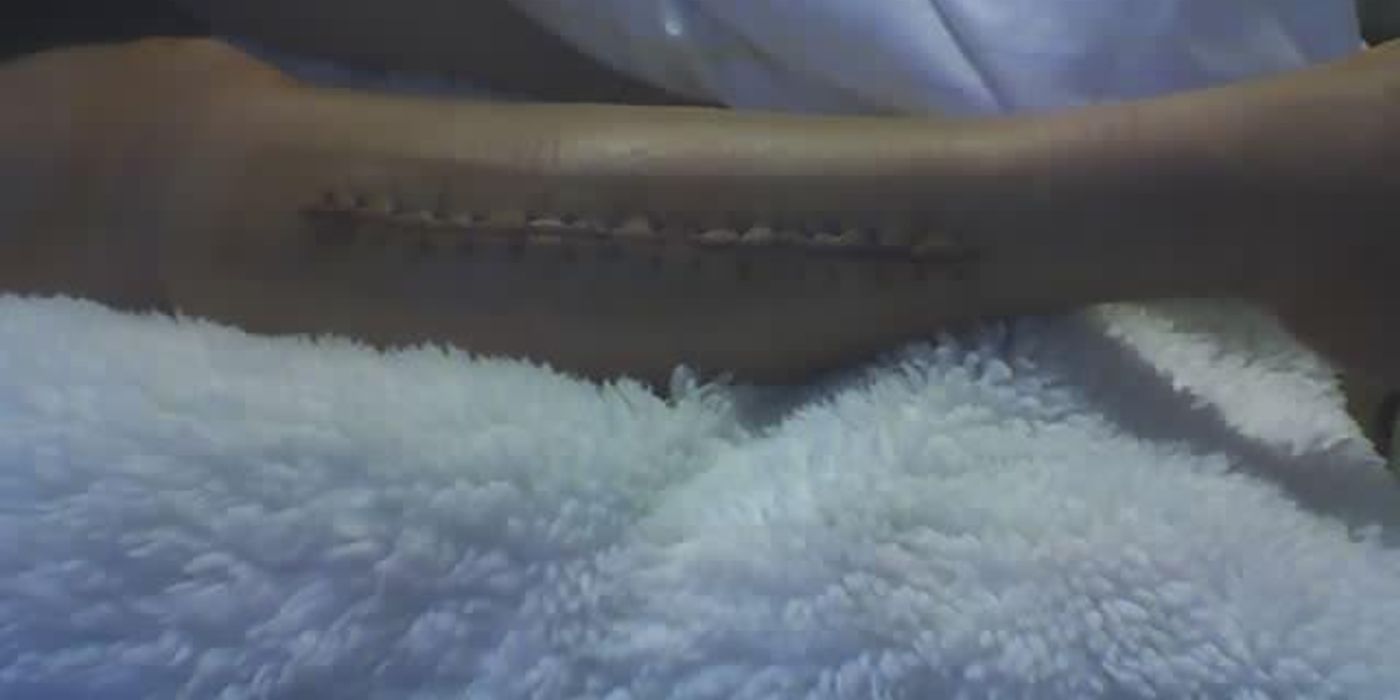
Acute compartment syndrome (ACS) is a surgical emergency in which rising pressure within a closed osteofascial compartment reduces tissue perfusion below the level needed for muscle and nerve viability. The cardinal feature is pain out of proportion to the injury, made worse by passive stretch of the muscles in the affected compartment. Treatment is immediate open surgical decompression (fasciotomy) of all involved compartments, as set out in the British Orthopaedic Association Standard (BOAST) on the Diagnosis and Management of Compartment Syndrome of the Extremities, updated July 2025.
Who gets acute compartment syndrome?
The commonest cause is fracture, particularly of the tibial diaphysis, and the highest-risk group is young men — an epidemiology established by McQueen, Gaston and Court-Brown's Edinburgh series (J Bone Joint Surg Br, 2000). Other recognised causes include crush injury, reperfusion after vascular injury or revascularisation, tight casts or dressings, burns, prolonged limb compression in obtunded patients, and anticoagulation. Two traps matter in practice and at interview: an open fracture does not exclude ACS (the wound rarely decompresses all compartments), and the syndrome may develop post-operatively, which is why the BOAST requires ACS assessment to be part of the routine documented evaluation of patients with limb injury, after limb surgery, and in those at risk of hypoperfusion.
How is acute compartment syndrome diagnosed?
The diagnosis is primarily clinical. The Jul 2025 BOAST identifies the key findings as pain out of proportion to the associated injury and pain on passive movement of the muscles of the involved compartments. An escalating analgesic requirement is an early warning sign, so the standard requires that "the dose and rate of administration of analgesics, particularly opiates, must be recorded". Paraesthesia, motor weakness, pallor and pulselessness are late findings; a limb with palpable pulses can still have established compartment syndrome, because compartment pressure exceeds capillary perfusion pressure long before it exceeds systolic arterial pressure.
What to do, as per the Jul 2025 BOAST:
- Document a baseline assessment including time of examination, time and mechanism of injury, conscious level, neurovascular status, level of pain and response to analgesia.
- "Patients at risk of ACS should be assessed hourly with documentation of findings (whether present or not), an interpretation of these findings and rationale for management."
- Treat regional anaesthesia and patient-controlled analgesia with caution in at-risk limbs — the standard requires joint decision-making between patient, anaesthetist and surgeon, documented consent, and a local policy for monitoring for post-operative compartment syndrome, because effective analgesia can mask the cardinal symptom.
- Hospitals receiving these patients must train staff, use standardised assessment documentation, and be able to measure intracompartmental pressure.
What is the role of compartment pressure monitoring?
Pressure monitoring is an adjunct, not a prerequisite: a patient with a clear clinical diagnosis goes to theatre without measurement. Its role is in patients who cannot report pain (intubated, obtunded, head-injured, regional block in situ) and where clinical findings are inconclusive — in which case the BOAST calls for hourly repeated documented examination, consideration of intracompartmental pressure measurement with concurrent measurement of blood pressure, and senior surgical review.
| Parameter | Threshold (Jul 2025 BOAST) | Interpretation |
|---|---|---|
| Differential pressure (ΔP = diastolic BP − compartment pressure) | < 30 mmHg | "Indicates an increased risk" — interpret with the clinical picture and trend |
| Absolute compartment pressure | > 40 mmHg | "Urgent surgical decompression should be considered" |
The differential (ΔP) threshold derives from McQueen and Court-Brown's prospective study of continuous anterior-compartment monitoring in 116 tibial diaphyseal fractures (J Bone Joint Surg Br, 1996), which showed that using ΔP < 30 mmHg as the decompression threshold avoided both missed compartment syndrome and unnecessary fasciotomy, whereas absolute pressure thresholds alone would have over-treated many patients. Measuring blood pressure at the same time as compartment pressure is essential — a hypotensive patient develops ACS at lower compartment pressures.
What is the immediate management?
As per the Jul 2025 BOAST: "Patients with symptoms or clinical signs of ACS should have circumferential dressings released to expose the skin and the limb elevated and re-evaluation within 30 minutes." In practice this means splitting casts, padding and bandages down to skin — not merely loosening them. On limb position, the standard simply says the limb should be elevated; it is widely taught good practice (not BOAST wording) to keep the limb at approximately heart level and avoid excessive elevation, which lowers the arterial inflow pressure to an already ischaemic compartment. Correcting hypotension and hypoxia is likewise sensible supportive care.
If symptoms and signs persist on re-evaluation, the diagnosis is made — and the standard is unambiguous: "Immediate surgical decompression should follow a diagnosis of compartment syndrome." Note that the current (Jul 2025) wording specifies immediate decompression rather than a defined time window: candidates should avoid quoting historic hour-based targets as current guidance. ACS is one of the few indications for out-of-hours emergency orthopaedic surgery, and nothing — imaging, definitive fracture fixation planning, transfer logistics — should delay it.
How is fasciotomy performed?
The Jul 2025 BOAST requires open decompression of all involved compartments with debridement of non-viable muscle, and a documented assessment of each compartment and structure. For the leg it states: "A two-incision, four-compartment decompression is recommended for lower limb fasciotomies."
- Anterolateral incision — centred midway between the fibular shaft and the tibial crest — decompresses the anterior and peroneal (lateral) compartments; identify and protect the superficial peroneal nerve.
- Posteromedial incision — approximately 1–2 cm posterior to the medial tibial border — decompresses the superficial and deep posterior compartments; protect the saphenous vein and nerve, and release the deep posterior compartment by elevating soleus from the tibia.
- Fascial releases must run the full length of each compartment, with generous skin incisions: skin itself can be a constricting layer (a point of good practice supported by the requirement for open decompression).
- Muscle viability is judged by the classic "4 Cs" — colour, consistency, contractility, capacity to bleed (good practice, not BOAST wording); frankly necrotic muscle is excised.
Wounds are left open and dressed. The BOAST then sets two firm post-operative standards: "All patients should be discussed with a plastic surgeon within 24 h of fasciotomy and undergo re-exploration within 72 hours or earlier if clinically indicated." Delayed primary closure or split-skin grafting follows once the muscle is demonstrably viable. For foot compartment syndrome, the standard acknowledges there is no consensus on management and requires a documented justification of whichever plan is chosen.
How should late presentation be managed?
Missed or delayed ACS changes the calculus: fasciotomy of an already-infarcted compartment exposes dead muscle without restoring function, and carries high risks of infection, sepsis and amputation. The Jul 2025 BOAST states that "patients with delayed presentation or diagnosis have a high risk of complications with surgery", and for these cases "decision making should involve two consultants, and non-operative management is an option accompanied by renal assessment and protection". Renal protection matters because established muscle necrosis causes rhabdomyolysis — monitor creatine kinase, potassium and renal function, and maintain urine output (good practice). At interview, the discriminating answer is that late, established ACS with dead muscle may be better served by supportive care and staged reconstruction than by reflex fasciotomy — but that this is a two-consultant, documented decision, never a unilateral one.
What are the complications?
- Volkmann's ischaemic contracture — fibrosis and contracture of infarcted muscle, causing permanent deformity and loss of function.
- Permanent sensory and motor deficit from nerve ischaemia.
- Rhabdomyolysis, hyperkalaemia and acute kidney injury.
- Infection of necrotic muscle, which may culminate in amputation.
- Chronic pain, and the morbidity of fasciotomy wounds themselves (scarring, grafting, occasional muscle herniation).
Missed compartment syndrome remains one of the most frequent and costly sources of litigation in trauma and orthopaedic practice — which is precisely why the BOAST places such weight on hourly documented assessment, recorded analgesic use, and written interpretation of findings.
Key points
- ACS is a clinical diagnosis: pain out of proportion to injury and pain on passive stretch; late signs (paraesthesia, pulselessness) must not be awaited.
- At-risk patients need hourly documented assessment, including analgesic doses and response (Jul 2025 BOAST).
- First response: release circumferential dressings to skin, elevate the limb, and re-evaluate within 30 minutes.
- Pressure monitoring is for the obtunded or equivocal patient: ΔP < 30 mmHg indicates increased risk; absolute pressure > 40 mmHg should prompt consideration of urgent decompression — always with concurrent blood pressure measurement.
- Once diagnosed: immediate surgical decompression — for the leg, a two-incision, four-compartment fasciotomy with debridement of non-viable muscle.
- Plastic surgery discussion within 24 hours and re-exploration within 72 hours (or sooner) are mandated standards.
- Late presentation: two-consultant decision-making; non-operative management is an option, with renal assessment and protection for rhabdomyolysis.