
If you're applying for Trauma and Orthopaedic Surgery ST3 (T&O ST3) in 2026 this guide covers everything from the application and self-assessment to interview preparation and changes for the ST3 Trauma and orthopaedics interview 2026.
This ultimate guide looks at the essentials of the T&O ST3 application process, including key dates, the interview structure, and insights into the level of competition, helping you to rank highly and get your first choice job.
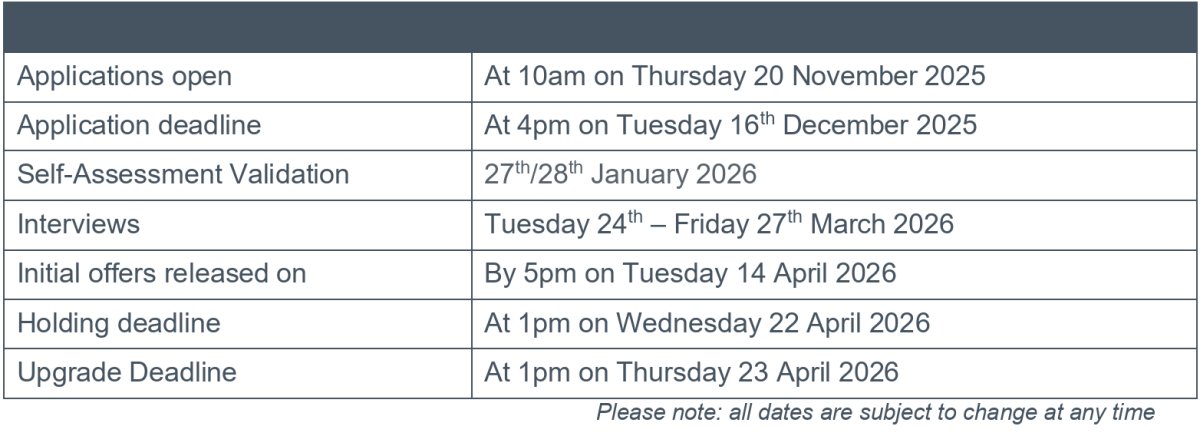
ST3 Trauma and Orthopaedics: Key Dates for 2026 Interview
Mark the following important dates in your calendar for the T&O ST3 2026 recruitment:
Applications open | At 10am on Thursday 20 November 2025 |
|---|---|
Application deadline | At 4pm on Tuesday 16’” December 2025 |
Self-Assessment Validation | 27th/28th January 2026 |
Interviews | Tuesday 24th - Friday 27th March 2026 |
Initial offers released on | By 5pm on Tuesday 14 April 2026 |
Holding deadline | At 1pm on Wednesday 22 April 2026 |
Upgrade Deadline | At 1pm on Thursday 23 April |
Note: Dates are subject to change.
Knowing your interview date is crucial for planning your interview preparation and ensuring you are ready for the selection process.
For successful applicants, the start date of the training programme is an important eligibility criterion, as you must be able to commence your post by the specified date to secure your position.
If you need to reapply the following year, many resources and support options are available to help you prepare for the next application cycle.
Understanding the Specialty
A deep understanding of trauma and orthopaedic surgery is essential for any aspiring orthopaedic trainee aiming to secure a national training number and excel in this highly competitive specialty. Gaining insight into the experiences, preparedness, and perspective required for trauma and orthopaedic surgery is crucial for applicants to demonstrate their suitability for the field. Trauma and orthopaedic surgery is a dynamic field focused on diagnosing, treating, and preventing injuries and disorders of the musculoskeletal system. Success in this specialty requires not only technical skills and clinical knowledge but also strong communication abilities and a genuine commitment to patient care.
With high competition ratios and rigorous entry criteria set by NHS England, applicants must demonstrate more than just academic excellence. The person specification for orthopaedic surgery ST3 posts highlights the importance of career motivation, leadership, and the ability to work effectively within multidisciplinary teams. Candidates are expected to show evidence of their dedication to the specialty, both through their clinical experience and their ongoing professional development.
The ST3 Trauma and Orthopaedics program presents significant challenges, including managing heavy workloads and securing operative training time, but also offers valuable opportunities for skill development and career advancement. Many surgeons and trainees in T&O experience high rates of burnout due to demanding working conditions, on-call responsibilities, and long hours. Increasing support for flexible working arrangements aims to mitigate burnout and attract a diverse range of medical professionals to the specialty. Senior colleagues and established support networks provide essential guidance to ST3 trainees during their transition into the program. Trainees also have opportunities to engage in research, audit, and academic projects, enhancing their career profile through potential publications and presentations. Accessing the operating theatre for practical experience can be difficult due to a lack of junior staff for ward cover and a focus on complex procedures. The incorporation of advanced technologies, such as robotic surgery and computer-aided navigation, is improving both training and patient outcomes. The program offers diverse clinical exposure, including operating theatres, outpatient clinics, and emergency departments, covering a wide range of cases.
Preparation is key to standing out in the interview process. Engaging in mock interview courses, practicing with question banks, and focusing on the communication station and clinical station can significantly enhance your performance. These resources help candidates refine their technical knowledge, improve their problem-solving skills, and develop the confidence needed to excel under pressure. Attending courses, workshops, and conferences also provides valuable opportunities to expand your understanding of trauma and orthopaedic surgery and to network with peers and mentors.
Staying informed about the latest advancements in the specialty is crucial. The Royal College of Surgeons and other professional bodies offer guidance on required examinations and qualifications, such as the MRCS and FRCS, ensuring that trainees are well-prepared for each stage of their career. By actively seeking feedback, participating in online forums, and collaborating with colleagues, orthopaedic trainees can continue to develop their skills and stay ahead in this ever-evolving field.
Ultimately, the highest scoring candidates are those who invest in their preparation, make use of available support, and demonstrate a clear understanding of the specialty. By being aware of the application process, interview requirements, and the expectations set by the profession, you can give yourself the best chance of success in the ST3 orthopaedic interview and beyond. With dedication, preparation, and a passion for trauma and orthopaedic surgery, you can achieve your career goals and make a meaningful impact in the NHS and the wider healthcare community.
ST3 Orthopaedic Competition Ratios
In 2025, there were 684 applications for 150 ST3 Trauma and Orthopaedic Surgery posts, resulting in a competition ratio of 4.56. In 2023, there were 483 applicants for 160 posts, leading to a competition ratio of 3.02. The number of applicants for ST3 Trauma and Orthopaedic Surgery has increased by 5% over a five-year period. This underscores the highly competitive nature of this field and the necessity for a strong, well-prepared application.
66% of trainees are selective about which deaneries they apply to for their first attempt at obtaining a national training number in Trauma and Orthopaedic Surgery. However, if unsuccessful at their first attempt, only 36% of candidates remain selective about their applications in subsequent attempts, often broadening their choices to improve their chances.
ST3 T&O Application Process 2026
For the T&O ST3 2026 cohort, applications open from 20 November to 16 December 2025.
You must fill out the application form through the Oriel recruitment system, ensuring you complete all required sections, including self-assessment questions, employment history, and evidence uploads.
In the application, you’ll encounter multiple-choice Self-Assessment questions, demanding thoughtful responses backed with appropriate evidence. You will also need to provide evidence of completion of required competencies or training, such as core surgical competences or a core surgical training programme, to demonstrate your eligibility.
Be sure to check out our full breakdown of the self-assessment scoring for 2026.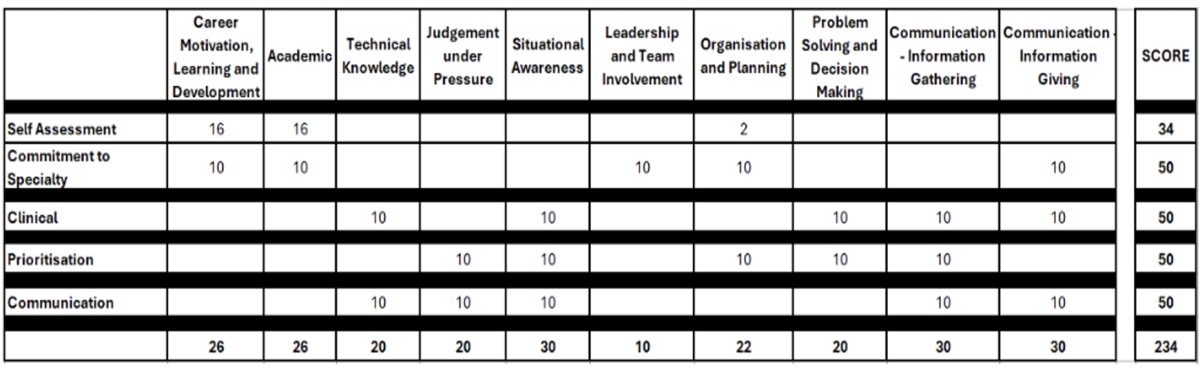
Prerequisites for Entry
To qualify for T&O ST3, you need to have:
Successfully completed MRCS Part A and Part B by the date of the offer
At least 10 months of experience in Trauma and Orthopaedic Surgery
CT/ST1 and CT/ST2 ISCP competencies from the T&O curriculum within the past 24 months
A minimum of 8 months in two related specialties (e.g., Plastic Surgery, Neurosurgery, etc.)
Further details about entry criteria and specifications can be found in our application guide.
Royal College Guidelines
The Royal College of Surgeons of England plays a pivotal role in guiding orthopaedic trainees through every stage of their career, especially when preparing for the highly competitive ST3 Trauma and Orthopaedics interview. The College’s guidelines set out the essential requirements for entry into orthopaedic surgery, including the completion of required examinations such as MRCS Part A and Part B, and provide a clear person specification for the specialty.
For candidates aiming to secure a national training number, understanding and following these guidelines is crucial. The Royal College outlines the entry criteria, competition ratios, and the application process, ensuring that applicants are fully aware of what is expected at each stage. This includes submitting an application form electronically, completing a detailed self assessment, and preparing for the national selection interview, which features multiple stations such as the clinical station, communication station, and prioritisation station. Each of these stations is designed to assess your technical skills, clinical knowledge, communication abilities, and judgement under pressure.
Interview preparation is a key focus of the Royal College’s advice. They recommend that orthopaedic trainees engage in mock interview courses, practice with question banks, and develop their skills in both technical and non-technical areas. Practicing for the communication station and clinical station is particularly important, as these are core components of the interview process and are critical for demonstrating your readiness for a career in trauma and orthopaedic surgery.
In addition to technical preparation, the Royal College emphasizes the importance of career motivation, leadership, and teamwork—qualities that are essential for success in orthopaedic surgery. Their resources include guidance on developing these attributes, as well as support for building a strong portfolio and gathering evidence of your achievements.
The Royal College also provides up-to-date information on competition ratios, entry criteria, and required qualifications, which can be found on both their website and the NHS England website. This ensures that candidates are always working with the latest information as they prepare for their ST3 interview and future career development.
For those interested in other surgical specialties, such as vascular surgery, plastic surgery, general surgery, or ENT surgery, the Royal College offers similar guidance and support, helping all surgical trainees navigate the application process and succeed in their chosen field.
In summary, the Royal College Guidelines are an invaluable resource for anyone preparing for the ST3 orthopaedic interview. By making full use of the College’s advice, resources, and support—especially in areas like interview preparation, technical skills, and communication—candidates can give themselves the best possible chance of success in trauma and orthopaedic surgery. For further information and the latest updates, be sure to visit the Royal College website.
Interview Structure for T&O ST3
The ST3 interview consists of a comprehensive 60-minute process, divided into four 10-minute stations. Each station is assessed by two interviewers, who independently score candidates to ensure an objective evaluation:
Discussion on career aspects.
Evaluation in Career Motivation, Leadership, Organisation, and Academic skills.
Trauma or elective scenario-based questions.
Assessment in Technical Knowledge, Problem Solving, and Communication.
Example: You may be presented with a case of a patient with a femoral shaft fracture and asked to outline your initial management steps.
Exercise in prioritising cases.
Judged on Organisation, Communication, Decision-making under pressure, and judgement.
Communication station
Patient communication scenarios.
Analysis in Technical Knowledge, Situational Awareness, Communication, and information giving as a key skill.
The ST3 Orthopaedic Interview Format
Interviewers have been keen to return the interview to the OSCE/MMI style format seen at the in-person interviews to help better differentiate between the best candidates. The OSCE/MMI format uses various assessment methods to evaluate candidates' skills and suitability.
HEE and the ST3 Orthopaedic interviews will be using QPERCOM which allows for an OSCE/MMI-style circuit of interview stations.
This has also necessitated an increase in the interview time to 60-minutes to allow time for change-over and instructions to be shown to candidates.
Interview Scoring
Scores from each station and validated Self-Assessment contribute to your total interview score, with a maximum of 234 points.
A minimum of 146/234 is required to be considered appointable.
ST3 Orthopaedic Interview Courses
Effective interview preparation is essential to maximise your chances of ranking highly and getting your first choice job. Realistic practice under pressure is crucial, and attending a mock interview course allows you to simulate real interview conditions, receive feedback, and improve your performance. Our popular ST3 T&O interview courses have helped the top candidates rank highly since 2014. We strongly recommend that you attend these courses as part of your strategy to prepare early and thoroughly for the interview. Please note that access to courses and resources may vary by region, so plan accordingly to ensure you have the support you need.
FAQs
What is the self-assessment score for ST3?
The ST3 T&O self-assessment score forms a major part of your overall ranking score for Trauma & Orthopaedics ST3. You are required to score yourself across multiple domains such as:
Surgical experience
Audit & quality improvement
Teaching & training
Leadership & management
Publications & research
Courses & presentations
Your self-assessment is validated after application submission, and any discrepancies can result in score adjustments. The validated self-assessment contributes directly to your final appointable score, alongside your interview performance.
What is the score for ST3 T&O interviews?
The maximum total score for ST3 Trauma & Orthopaedics is 234 points. This includes:
Validated Self-Assessment
Interview Performance (across all stations)
You must typically achieve a minimum of around 146/234 to be considered appointable. However, achieving an offer usually requires a significantly higher score due to competition.
How to apply for ST3 Orthopaedics?
To apply for ST3 Trauma & Orthopaedic Surgery:
Apply via Oriel during the official national recruitment window
Complete:
Employment history
Evidence uploads
Self-Assessment questions
Ensure eligibility requirements are met, including:
MRCS Part A & B
Minimum orthopaedic experience
Core Surgical Competencies (CT1/CT2 or equivalent)
Submit before the national deadline
Attend self-assessment validation if shortlisted
Sit the ST3 Orthopaedic Interview
Your final ranking is based on your validated self-assessment + interview score.
What questions are asked in an orthopaedic interview?
The ST3 Orthopaedic interview uses an OSCE/MMI-style format and typically includes:
1. Portfolio / Commitment to Specialty
Why Trauma & Orthopaedics?
What are you most proud of in your career?
What have you improved since your last application?
Evidence of leadership, teaching, audits, research
2. Clinical Scenarios
Trauma scenarios (e.g. femoral fractures, open fractures, polytrauma)
Elective orthopaedics (hip fractures, arthroplasty complications)
Initial assessment, investigations, management planning
Communication with seniors and MDT
3. Prioritisation / Organisation
Sorting a busy on-call take
Managing multiple competing priorities
Escalation and risk management
Theatre list prioritisation
This station is one of the hardest for time pressure.
4. Communication Station
Breaking bad news
Consent and complications
Managing difficult patients or relatives
Capacity, ethics, and professionalism
Some candidates may also face academic or critical appraisal questions, such as interpreting a recent paper or discussing how evidence impacts practice. You can check our sample questions here.
How hard is the ST3 Ortho interview?
The ST3 Orthopaedic interview is widely considered one of the toughest surgical specialty interviews with over 500 people applying for 100 jobs each year. ST3 ortho is tough due to:
High competition ratios
Strong candidate cohort
Time-pressured stations
High expectations of clinical reasoning
Significant weight placed on prioritisation and communication skills
Many candidates report leaving the interview feeling uncertain — even those who go on to secure offers. Feeling “pushed” by examiners is extremely common.
Is the ST3 Orthopaedic prioritisation station difficult?
Yes — the prioritisation station is consistently reported as one of the most difficult parts of the ST3 Ortho interview. Challenges include:
Rapid decision-making
Limited time
Competing trauma and elective cases
Risk assessment
Justifying escalation and delays
Strong candidates practise this station repeatedly under exam-style time pressure.
Do I need a course to pass the ST3 Orthopaedic interview?
The majority of successful candidates attend a course. The most effective preparation methods include:
Practising with orthopaedic registrars and consultants
Simulated mock interview courses
Reviewing real T&O ST3 interview questions
Regular clinical scenario practice
What are the most common reasons candidates fail ST3 Ortho interviews?
Common pitfalls include:
Poor time management in prioritisation
Weak communication skills despite good clinical knowledge
Over-reliance on self-assessment without matching interview performance
Inadequate preparation for leadership and commitment questions
Limited reflection on audits, complications, and learning points
What is the competition ratio for ST3 Orthopaedics?
Recent competition ratios remain consistently high. In 2025, the ratio was just over 3:1, meaning only 1 in 3 candidates secured a post. This makes ST3 Orthopaedics one of the most competitive surgical specialties in the UK.
Can I re-apply for ST3 Ortho if I don’t get in the first time?
Yes. Many successful candidates secure an ST3 post on their second or third attempt. Between applications, strong candidates focus on:
Improving self-assessment domains
Strengthening audits, teaching, leadership, and research
Gaining additional trauma exposure
Structured interview practice
Targeted registrar feedback
Re-application is common, expected, and often successful with the right strategy.